Clinical MRI Interpretation
Essentials of interpreting MRI images in clinical settings, with a focus on brain anatomy, the use of brain atlases, and MRI diagnostics for brain diseases
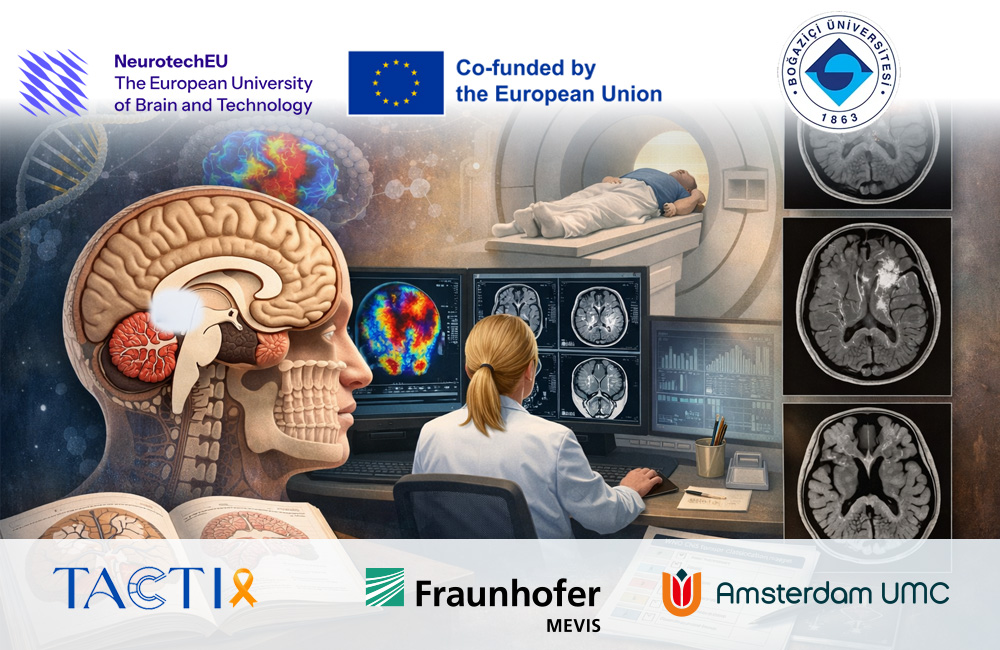
This course covers the essentials of interpreting MRI images in clinical settings, with a focus on brain anatomy, the use of brain atlases, and MRI diagnostics for brain diseases. Through ten expert-led lectures by Dr. Vera Keil, Dr. Aynur Azizova, Dr. Eva Strijbis, Prof. Esin Öztürk Işık, Dr. Joost Kuijer, and Dr. David van Nederpelt, participants will gain insight into the sophisticated transition from basic anatomical landmarks to advanced molecular and physiological MRI interpretation and learn to identify key anatomical structures, utilize brain atlases for reference, and recognize MRI patterns associated with various neurological conditions. The course also covers the latest global diagnostic standards, including the 2021 WHO CNS tumor classification and the 2024/2025 McDonald Criteria for Multiple Sclerosis. By the end of the course, participants will have a clearer understanding of how to differentiate among common neurodegenerative patterns, classify complex brain tumors using integrated molecular imaging markers, and recognize the specific MRI "signatures" that distinguish MS from its clinical mimics.
This course collection is offered as part of the TACTIX project in collaboration with Boğaziçi University, Amsterdam UMC and Fraunhofer MEVIS.
Target Audience: Healthcare professionals, (bio)medical (technology) students, and clinicians seeking to enhance their skills in interpreting MRI brain images in clinical settings.
Basic knowledge of human anatomy and familiarity with medical imaging concepts; prior experience with CT or MRI interpretation is beneficial but not mandatory.
Lessons
Number of lessons: 7-
Vera Keil
This lecture serves as a fundamental introduction to neuroradiology for researchers working in neuroinflammation. It bridges the gap between gross anatomy and magnetic resonance imaging (MRI), providing a "basics of the basics"…
-
Vera Keil, Aynur Azizova
This lecture provides a comprehensive guide to the modern, biology-based management of dementia. It moves beyond traditional symptom-based diagnosis to explore how neuroimaging and fluid biomarkers can detect neurodegenerative…
-
Vera Keil, Aynur Azizova
This lecture provides a comprehensive introduction to Central Nervous System (CNS) tumors, emphasizing the critical transition from purely histological assessments to integrated molecular diagnostics. It walks students through the…
-
Vera Keil, Aynur Azizova
This extensive lecture covers the evolution of Multiple Sclerosis (MS) from a disease of "types" to a biological continuum of inflammation and neurodegeneration. It provides a deep dive into the 2024/2025 McDonald Criteria…
-
Vera Keil, Aynur Azizova
This lecture provides a comprehensive overview of vascular anatomy and advanced MRI techniques for diagnosing neurovascular diseases. It begins by establishing a strong foundation in the arterial and venous anatomy of the brain…
-
Vera Keil, Aynur Azizova
This lecture provides a comprehensive overview of vascular anatomy and advanced MRI techniques for diagnosing neurovascular diseases. It begins by establishing a strong foundation in the arterial and venous anatomy of the brain…
-
Vera Keil, Eva Strijbis
This lecture addresses the complex diagnostic challenge of distinguishing Multiple Sclerosis (MS) from its many clinical "mimics." It covers the specialized 2025 diagnostic criteria, emphasizing the importance of proving…