MRI Applications in Clinical Research
This specialized lecture series explores the powerful translation of advanced magnetic resonance imaging (MRI) techniques into definitive quantitative biomarkers for clinical research.
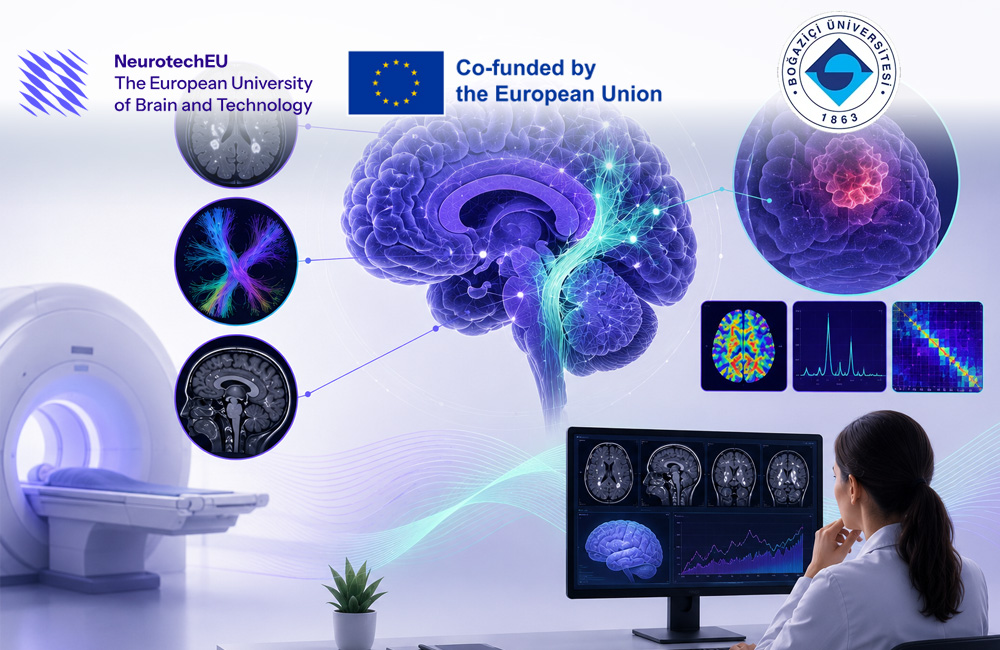
This specialized lecture series explores the powerful translation of advanced magnetic resonance imaging (MRI) techniques into definitive quantitative biomarkers for clinical research. Throughout the tutorial, participants dive into computational neuroimaging frameworks designed to characterize complex neuroinflammatory and oncological pathologies, with a heavy emphasis on Multiple Sclerosis (MS) and brain tumors. By integrating foundational clinical neuroscience with state-of-the-art post-processing pipelines, the lectures demonstrate how structural, functional, and metabolic alterations can be leveraged to guide diagnosis and forecast patient trajectories.
Target Audience: Graduate students, researchers, and medical doctors aiming to do clinical research with MRI
Course features/Learning outcomes:
- Understand the utilization of specialized imaging techniques, including Diffusion Tensor Imaging (DTI) and Arterial Spin Labeling (ASL), to monitor microstructural tissue degradation and regional blood flow alterations in neurodegenerative conditions.
- Learn to map resting-state functional connectivity changes within the brain to identify sub-clinical disruptions and track cognitive or motor network remodeling in Multiple Sclerosis patients.
- Gain knowledge in structural segmentation workflows to accurately measure regional gray and white matter volume loss over time, and explore machine learning frameworks that calculate "BrainAge" as a prognostic marker for clinical disability.
- Understand the principles of Magnetic Resonance Spectroscopic Imaging (MRSI) to track biochemical changes in brain tumors, and discover how radiomic signatures can non-invasively predict critical molecular and genetic mutations (such as IDH status).
- Learn best practices for establishing reproducible, high-throughput imaging processing pipelines essential for analyzing multi-site research datasets and translating findings into clinical trial applications.
Basic understanding of MRI, MRI basics for Multiple Sclerosis
Lessons
Number of lessons: 6-
Menno Shooneim
This lecture explores Multiple Sclerosis (MS) through the lens of network science, moving beyond simple lesion counts to explain why some patients experience severe symptoms while others remain relatively stable. The lectures…
-
Alessandro Cagol
This lecture discusses the evolution of magnetic resonance imaging (MRI) in the clinical management of Multiple Sclerosis (MS). It is highlighted that the transition is from conventional MRI, used for diagnosis according to the…
-
David van Nederpelt
This lecture offers an in-depth exploration of using brain atrophy measurements as a biomarker for Multiple Sclerosis (MS) progression. The speaker clarifies the conceptual distinction between "brain volume loss" (measured in vivo…
-
Michelle Jansen
This lecture provides a foundational overview of the "Brain Age" concept—a neuroimaging-derived metric that estimates an individual's biological brain age based on structural and functional characteristics, offering a potential…
-
Lonneke Bos
This lecture explores the practical implementation of "Brain Age" as a clinical biomarker for tracking neurodegeneration. Building on the technical background established in previous modules, the lecture demonstrates how Brain Age…
-
Esin Öztürk Işık
This lecture provides an in-depth overview of how advanced AI-driven neuroimaging is transforming the pre-operative classification of brain tumors, specifically gliomas and meningiomas. The lecture demonstrates how machine…